Electronic cigarettes, flavoured vapes and nicotine-free devices: are they really harmless to our lungs?
Vapes have become a common sight among teenagers and young adults. Their modern designs, fruit, mint and candy flavours, and the absence of the distinctive smell of tobacco have helped spread a misconception: that vaping is a virtually harmless alternative to smoking.
But what are we actually introducing into our lungs every time we use an electronic cigarette?
As a thoracic surgeon, I believe it is important to explain what the scientific evidence says about these devices, their potential consequences and why vaping is not simply inhaling water vapour.
WHAT DOES A VAPE REALLY CONTAIN?
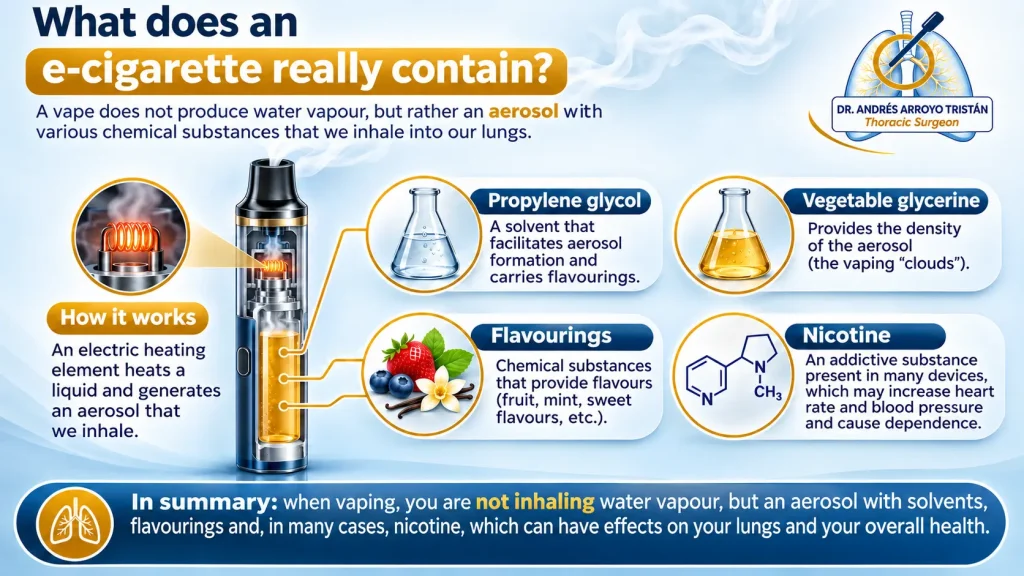
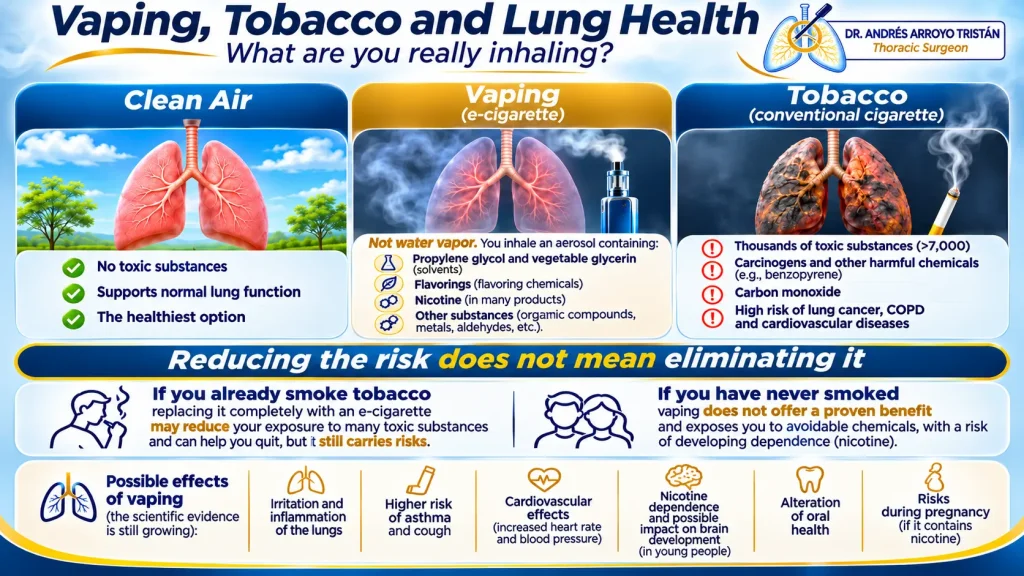
Unlike traditional cigarettes, which burn tobacco, vapes use an electric heating element to heat a liquid and produce an aerosol that we then inhale.
This liquid typically contains four main components:
Propylene glycol: a solvent that facilitates aerosol formation and carries flavourings.
Vegetable glycerine: responsible for producing the dense white clouds characteristic of vaping.
Flavourings: chemical substances that provide sweet, fruity or minty flavours.
Nicotine: present in many devices, although nicotine-free vapes are also available on the market.
Propylene glycol and glycerine are commonly used in food, cosmetic and pharmaceutical products.
However, there is a fundamental difference: just because a substance is safe to ingest does not necessarily mean it is safe to inhale repeatedly.
Our lungs are not designed to be exposed to aerosols containing heated solvents and flavourings over many years.
Furthermore, when these liquids reach high temperatures, chemical reactions can occur, generating additional potentially harmful substances.
WHAT YOU INHALE IS NOT WATER: TOXIC SUBSTANCES CAN ALSO ENTER YOUR LUNGS
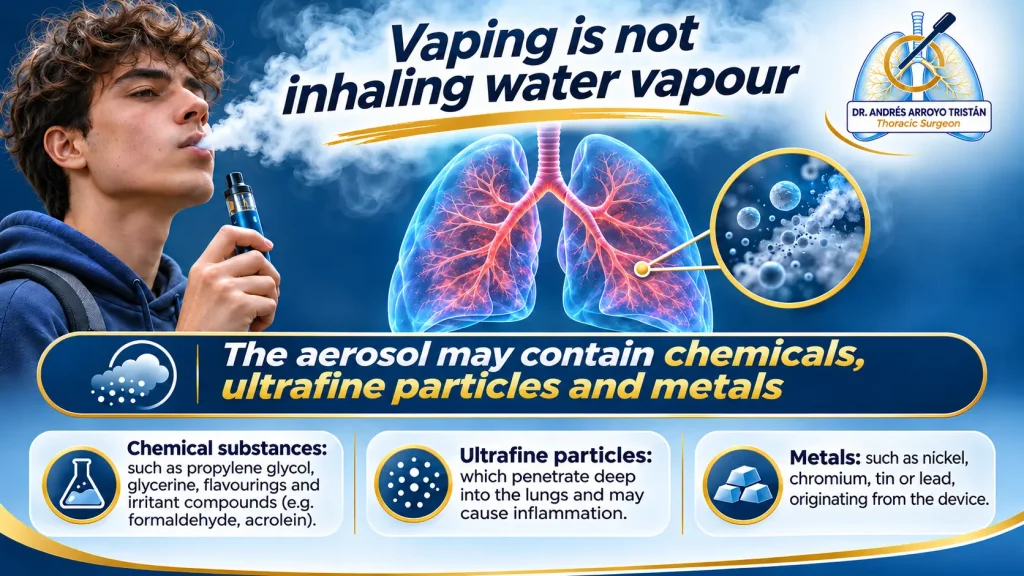
The aerosol produced by electronic cigarettes can contain ultrafine particles, volatile organic compounds, metals and substances resulting from the thermal degradation of liquids.
Among the substances identified in certain devices are:
Formaldehyde and acetaldehyde. These compounds can be generated when liquids are heated. Formaldehyde is classified as a human carcinogen, although the specific risk associated with exposure through vaping has not yet been adequately quantified.
Acrolein. This is an irritant that can form during the thermal degradation of glycerine and has the potential to damage the respiratory epithelium.
Metals such as nickel, chromium, tin or lead. These can originate from the metallic components of the device and enter the inhaled aerosol.
Flavouring compounds. Some, such as diacetyl, have been linked to serious respiratory diseases in certain occupational exposure settings. However, this does not mean that conventional vaping devices have been proven to cause the same disease.
The amount of these substances varies considerably depending on the device, the composition of the liquid, the temperature and the way it is used.
Therefore, the aerosol produced by a vape cannot be considered simply water vapour.
WHAT EFFECTS CAN VAPING HAVE ON THE LUNGS?
Scientific research has identified several mechanisms through which vaping can affect the respiratory system.
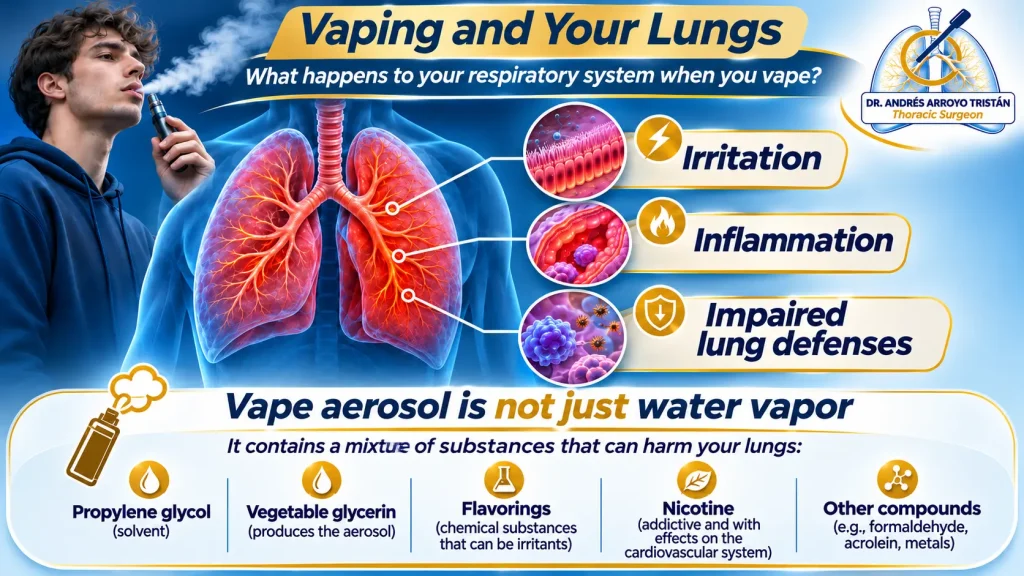
Inflammation and irritation of the airways
Exposure to the aerosol can cause irritation of the bronchial mucosa, coughing, a dry throat and respiratory symptoms.
Experimental studies have also observed inflammatory changes and oxidative stress in lung cells.
Asthma and bronchial symptoms
Several observational studies have found associations between electronic cigarette use and a higher prevalence of respiratory symptoms, wheezing and asthma.
However, these findings should be interpreted with caution, as some users also smoke or have previously smoked conventional cigarettes, making it difficult to establish an independent causal relationship.
Disruption of lung defence mechanisms
The lungs have specialised mechanisms for removing particles, microorganisms and foreign substances.
Experimental research suggests that certain components of the aerosol may impair epithelial cell function, mucociliary clearance and the activity of pulmonary macrophages.
These changes could promote inflammation and alter the response to respiratory infections.
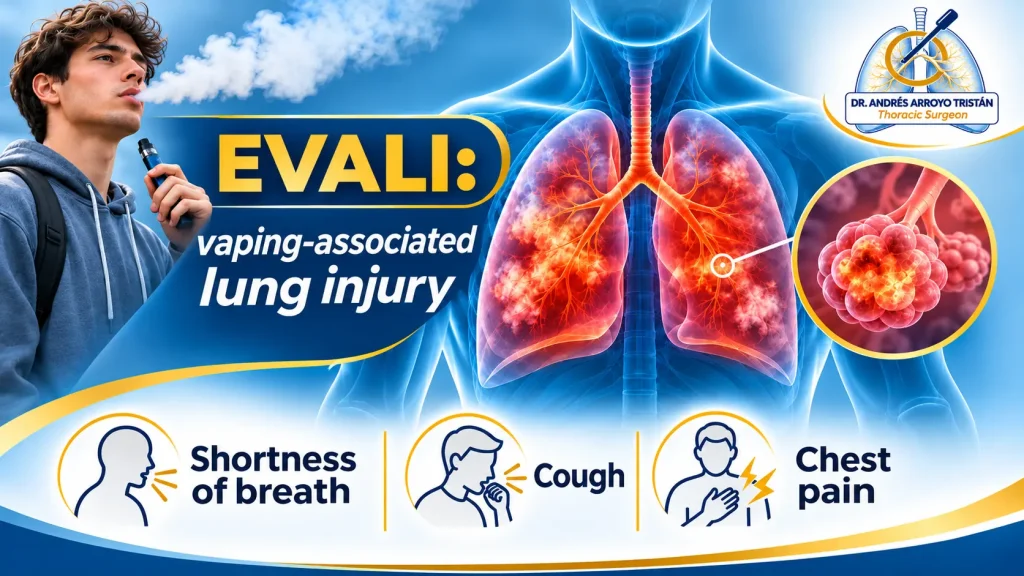
Vaping-associated acute lung injury: EVALI
In 2019, numerous cases of severe lung injury associated with the use of vaping products were identified in the United States.
This condition, known as EVALI (E-cigarette or Vaping Product Use-Associated Lung Injury), can manifest as coughing, difficulty breathing, chest pain, fever and severe respiratory failure.
Research closely linked this outbreak to vitamin E acetate, which was used as an additive in certain THC-containing vaping products, particularly those obtained from informal sources.
It is important to clarify that these cases should not be indiscriminately attributed to all conventional electronic cigarettes.
CAN VAPING CAUSE LUNG CANCER?
This is one of the questions that concerns patients the most.
We know that some electronic cigarette aerosols contain substances with carcinogenic potential, and that certain experimental studies have identified cellular damage, oxidative stress and alterations associated with mechanisms of carcinogenesis.
However, we still lack sufficient epidemiological evidence to quantify the long-term risk of lung cancer specifically caused by vaping.
Lung cancer can take decades to develop, and electronic cigarettes have only been widely used for a relatively short period of time.
Therefore, it would be incorrect to claim that vaping causes lung cancer with the same degree of scientific certainty as conventional tobacco smoking.
However, it would also be a mistake to interpret the absence of long-term data as proof of safety.
From a cancer prevention perspective, avoiding unnecessary exposure to potentially carcinogenic substances remains the most prudent option.
CAN VAPING ALSO AFFECT ORGANS OTHER THAN THE LUNGS?
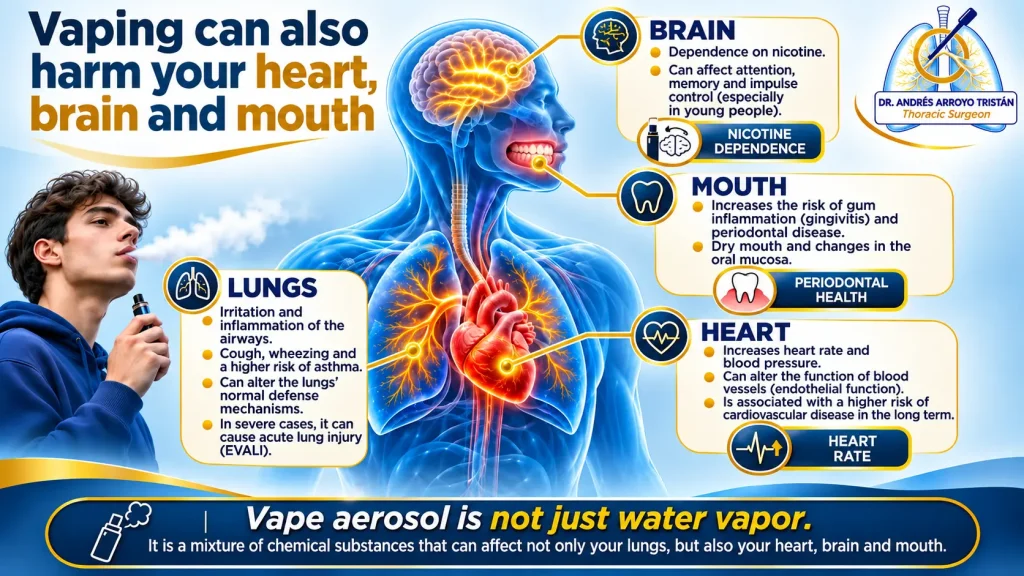
Although the aerosol is inhaled through the respiratory system, its potential effects are not limited to the lungs.
Heart and cardiovascular system. Nicotine can increase heart rate and blood pressure. Furthermore, studies have linked vaping to impaired endothelial function, oxidative stress and changes in platelet activity. The long-term cardiovascular consequences still require further research.
Brain and dependence. Nicotine is highly addictive. In adolescents and young adults, whose brains are still developing, exposure can affect neural circuits associated with reward, attention and impulse control. Devices containing nicotine salts can make it easier to inhale high concentrations of nicotine without causing such intense irritation.
Mouth and gums. Associations have been reported between vaping and impaired periodontal health, dry mouth and inflammation of oral tissues.
Pregnancy. Nicotine crosses the placenta and can adversely affect foetal development. Electronic cigarettes containing nicotine should not be considered safe during pregnancy.
WHAT IF THE VAPE DOES NOT CONTAIN NICOTINE?
One of the most common claims among young people is: “Mine doesn’t contain nicotine, so it won’t do any harm.”
However, the absence of nicotine does not eliminate the other components of the aerosol.
A nicotine-free vape may still contain propylene glycol, glycerine, flavourings and substances generated during heating.
Therefore, although it eliminates the risk of nicotine-related dependence, using a nicotine-free vape is not equivalent to breathing clean air.
We also do not yet fully understand the consequences of repeatedly inhaling these mixtures of chemicals over many years.
IS VAPING BETTER THAN SMOKING CONVENTIONAL CIGARETTES?
Here, we must distinguish between two different situations.
For an adult who smokes conventional cigarettes, completely replacing combustible tobacco with regulated electronic cigarettes may reduce exposure to numerous toxic substances produced during combustion.
Furthermore, scientific reviews have found that nicotine-containing electronic cigarettes can help certain adult smokers quit smoking.
However, reducing exposure to some toxic substances does not mean eliminating all risks.
The simultaneous use of conventional cigarettes and vaping devices should not be considered a strategy for protecting one’s health either.
The situation is entirely different for adolescents and young people who have never smoked: starting to vape offers no health benefits and introduces an avoidable exposure to chemicals, as well as the risk of dependence when nicotine is present.
WHAT SYMPTOMS SHOULD PROMPT YOU TO SEEK MEDICAL ADVICE?
If you use vaping devices and experience a persistent cough, shortness of breath, wheezing, chest tightness or a reduced ability to exercise, it is advisable to seek medical assessment.
Severe breathing difficulties, intense chest pain or a rapid worsening of symptoms require urgent medical attention.
Not all these symptoms are necessarily caused by vaping, but it is important to inform your doctor about which devices you use, how frequently you use them and what liquids they contain.
MY RECOMMENDATION AS A SURGEON
In my professional practice, I treat patients with lung diseases that can seriously affect their quality of life and, in some cases, require complex surgical procedures.
Prevention is an essential part of respiratory health.
We do not need to wait several decades to recognise that repeatedly inhaling chemical aerosols is not equivalent to breathing clean air.
At the same time, we must provide accurate, evidence-based information, without exaggerating risks that have not yet been established or ignoring the effects that research has already identified.
My message to young people is simple:
Just because something smells like fruit, has an attractive design and does not produce tobacco smoke does not mean it is harmless.
If you have never smoked, do not start vaping.
And if you already use electronic cigarettes, particularly those containing nicotine, seeking help to quit is a positive decision for your health.
Your lungs are designed to breathe air, not chemical aerosols.
Dr. Andrés Arroyo Tristán
Specialist in Thoracic Surgery – Murcia
SCIENTIFIC BIBLIOGRAPHY AND REFERENCE SOURCES
World Health Organization (WHO). Tobacco: E-cigarettes. 2024.
World Health Organization. Electronic cigarettes: Advocacy brief. 2026.
Centers for Disease Control and Prevention (CDC). About E-Cigarettes (Vapes).
CDC. Health Effects of Vaping. 2025.
Cochrane Database of Systematic Reviews. Electronic cigarettes for smoking cessation. 2026 update.
Health impacts of electronic nicotine delivery systems: an umbrella review of systematic reviews. 2025.
Food and Drug Administration (FDA). E-Cigarettes, Vapes, and Other Electronic Nicotine Delivery Systems.