PECTUS EXCAVATUM SURGERY IN MURCIA
WHAT IS PECTUS EXCAVATUM?
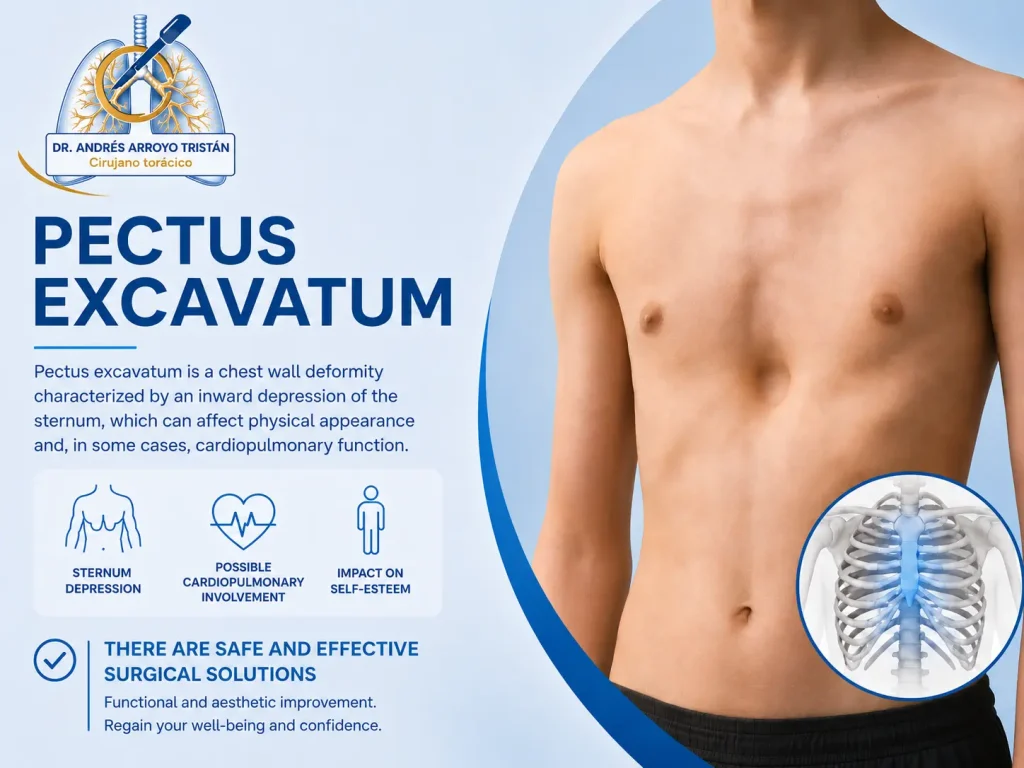
The pectus excavatum is the most common congenital deformity of the chest wall. It is characterized by a variable sinking of the sternum and costal cartilages towards the inside of the thorax, producing a visible depression in the anterior part of the chest.
In many patients, the problem is mainly aesthetic, and may cause insecurity, changes in self-esteem, or limitations in social and sporting activities. However, in a small percentage of cases, especially when the deformity is severe, there may be functional repercussions, with cardiac compression or reduced lung capacity. This can cause symptoms such as fatigue, chest pain, exercise intolerance, or a sensation of shortness of breath.
The surgical indication in most patients is usually mainly aesthetic and psychological, although an individualized assessment should always be carried out to rule out significant cardiopulmonary involvement.
There are currently different therapeutic alternatives, adapted to the age, type of deformity, and patient expectations.
NUSS TECHNIQUE
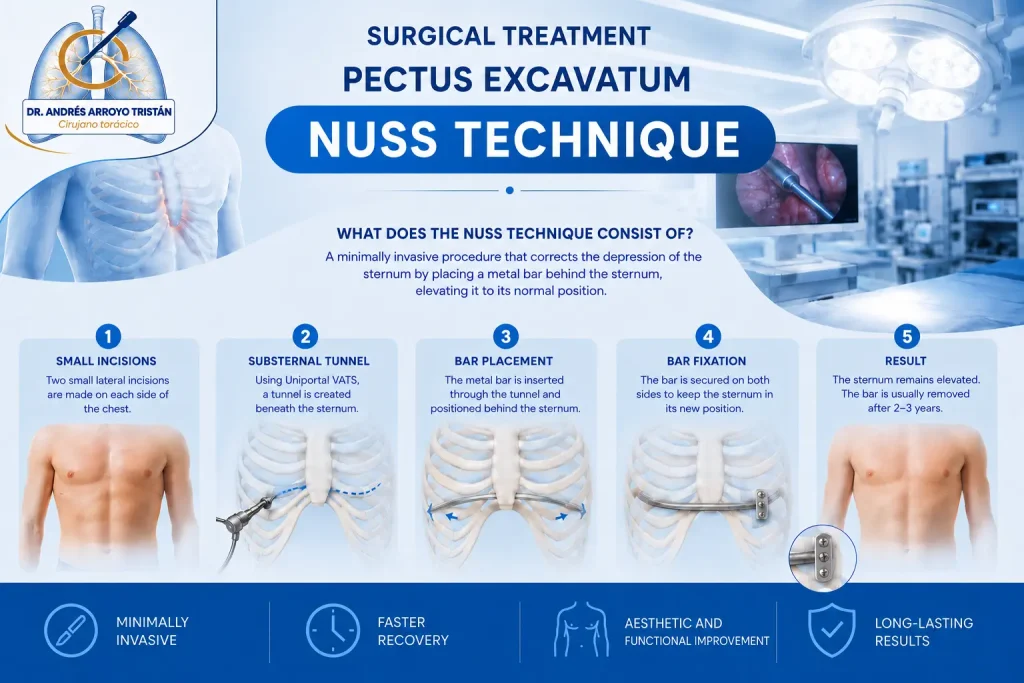
The most widely used technique worldwide is the Nuss technique, a minimally invasive procedure that consists of inserting one or more metal bars through small lateral incisions in the chest.
These bars are placed behind the sternum to elevate it and progressively correct the deformity.
The surgery is usually performed by videothoracoscopy, which allows for faster recovery and better aesthetic results compared with traditional open techniques.
CUSTOMIZED 3D IMPLANTS
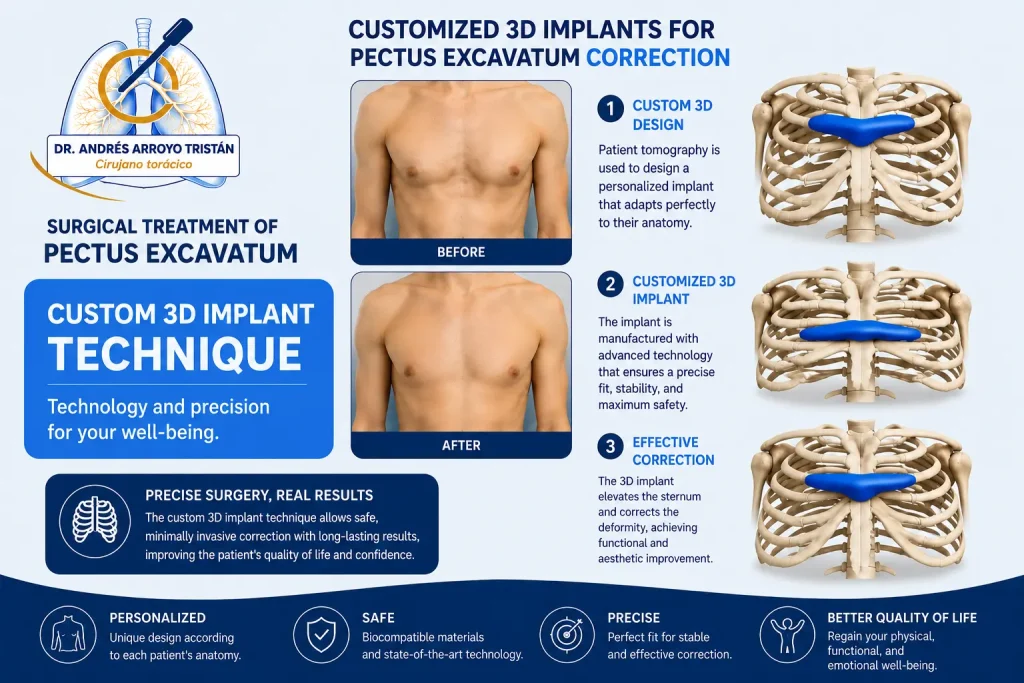
In selected patients, especially adults with aesthetic concerns or with complex asymmetric deformities, the use of customized 3D implants may be considered.
These implants are designed specifically for each patient using imaging studies and digital planning, allowing the defect to be corrected with a highly personalized and minimally invasive aesthetic result.
Dr. Arroyo is a reference surgeon for two of the main commercial companies that produce this product:
http://anatomikmodeling.com/es/encontrar-un-cirujano/dr-andres-arroyo-tristan
https://www.anatomikmodeling.com/es/tratamiento-del-pectus-excavatum
https://cevexternal.com/contacto-dr-andres-arroyo-tristan
https://cevexternal.com/p-excavatum
http://anatomikmodeling.com/es/encontrar-un-cirujano/dr-andres-arroyo-tristan
https://www.anatomikmodeling.com/es/tratamiento-del-pectus-excavatum
https://acvexternal.com/contacto-dr-andres-arroyo-tristan
https://acvexternal.com/p-excavatum
RAVITCH TECHNIQUE
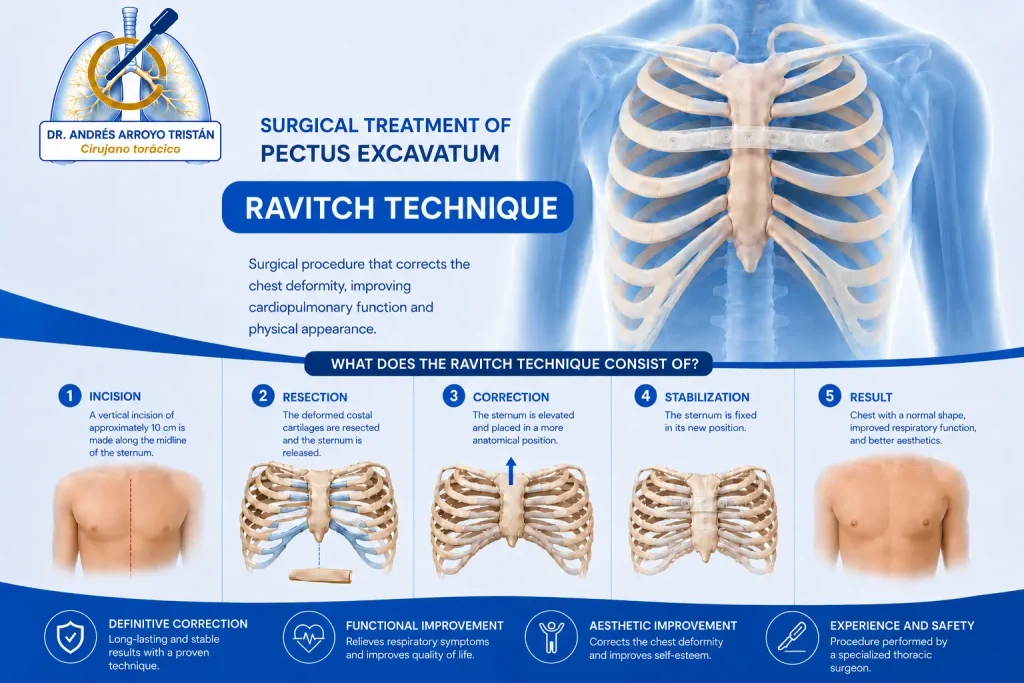
Other classic surgical techniques, such as the Ravitch technique, continue to be indicated in certain complex cases.
This procedure consists of the resection of deformed cartilages and remodeling of the sternum through open surgery.
There are also complementary techniques such as taulinoplasty, used in specific situations to improve the thoracic contour.
VACUUM BELL
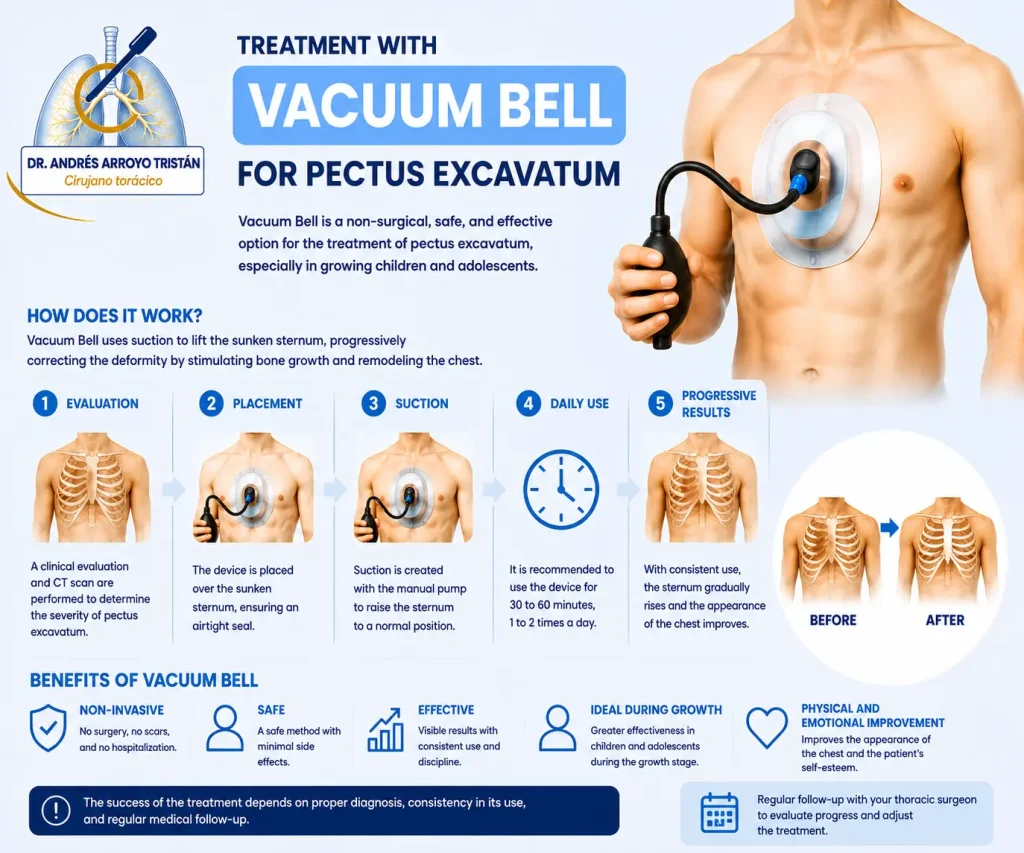
Not all patients require surgery. In mild or moderate deformities, especially in young patients with a flexible chest wall, non-invasive treatments such as the Vacuum Bell may be used.
The Vacuum Bell is an external suction device that progressively elevates the sternum through negative pressure applied to the chest.
Its effectiveness depends on the patient’s age, the flexibility of the rib cage, and consistency with the treatment.
PECTUS CARINATUM
On the other hand, pectus carinatum represents the opposite deformity to pectus excavatum, characterized by a forward protrusion or “bulging” of the sternum.
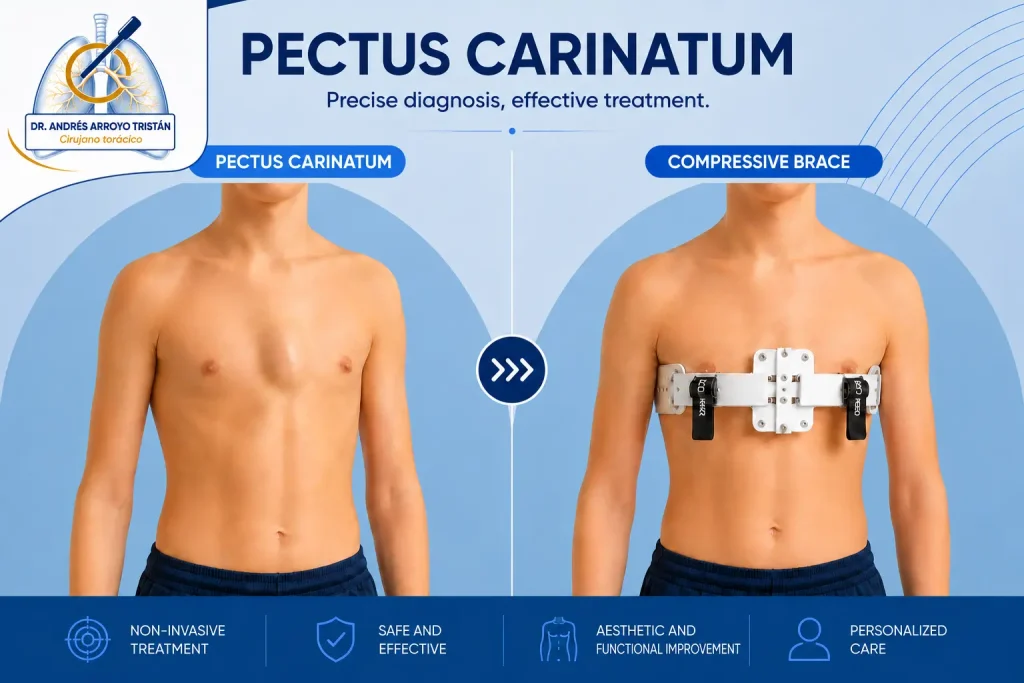
In many cases, it can be treated non-invasively through the use of a dynamic compression brace, especially during adolescence, taking advantage of the elasticity of the growing chest wall.
When orthotic treatment is not effective or the deformity is severe, surgical correction may be considered, with the Ravitch technique being one of the most commonly used options.