

MEDIASTINAL SURGERY IN MURCIA
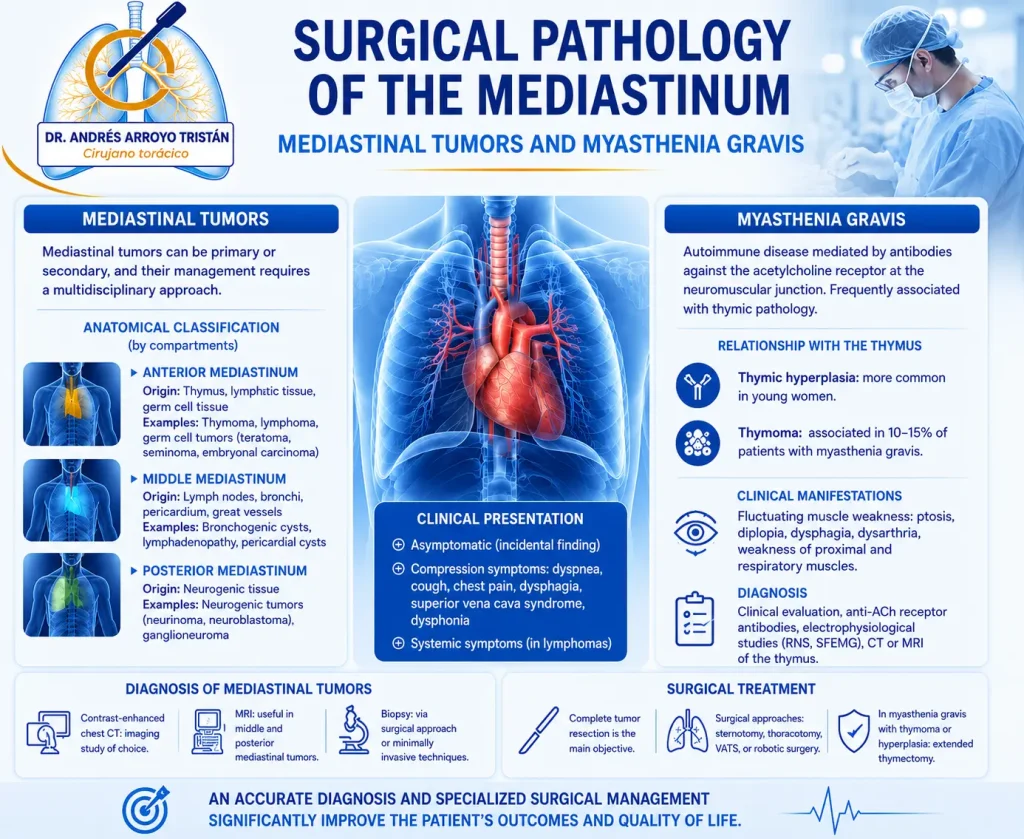
Mediastinal tumors are a heterogeneous group of neoplasms located in the space between the lungs, extending from the sternum to the vertebral column. This compartment contains vital structures such as the heart, great vessels, trachea, esophagus, thymus, and lymph nodes. Among the most common tumors are thymomas, which are neoplasms of the thymus frequently associated with myasthenia gravis, as well as cysts, lymphomas, and other rare tumors. Clinically, they may be asymptomatic and detected incidentally on imaging studies, or present with local symptoms due to compression of mediastinal structures, such as dyspnea, cough, chest pain, dysphagia, or vascular alterations. In the case of thymoma associated with myasthenia gravis, surgical management has a dual objective: to remove the neoplasm and improve control of neuromuscular symptoms.
The surgical indication in patients with myasthenia gravis requires a careful assessment of disease severity and respiratory function, with clinical stabilization through pharmacological treatment before surgery. Thymectomy is indicated in patients with confirmed thymoma and in certain cases of generalized myasthenia gravis to improve symptom control and reduce dependence on immunosuppressants.
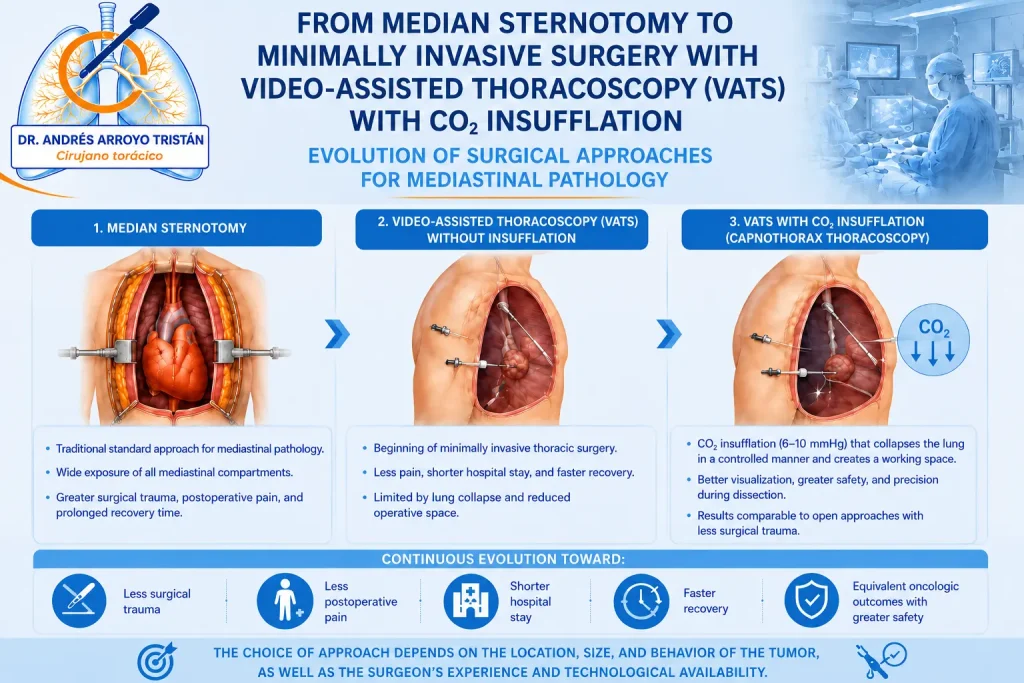
Traditionally, mediastinal resection was performed through median sternotomy, which provides wide access but involves greater surgical trauma, postoperative pain, prolonged hospital stay, and slower recovery.
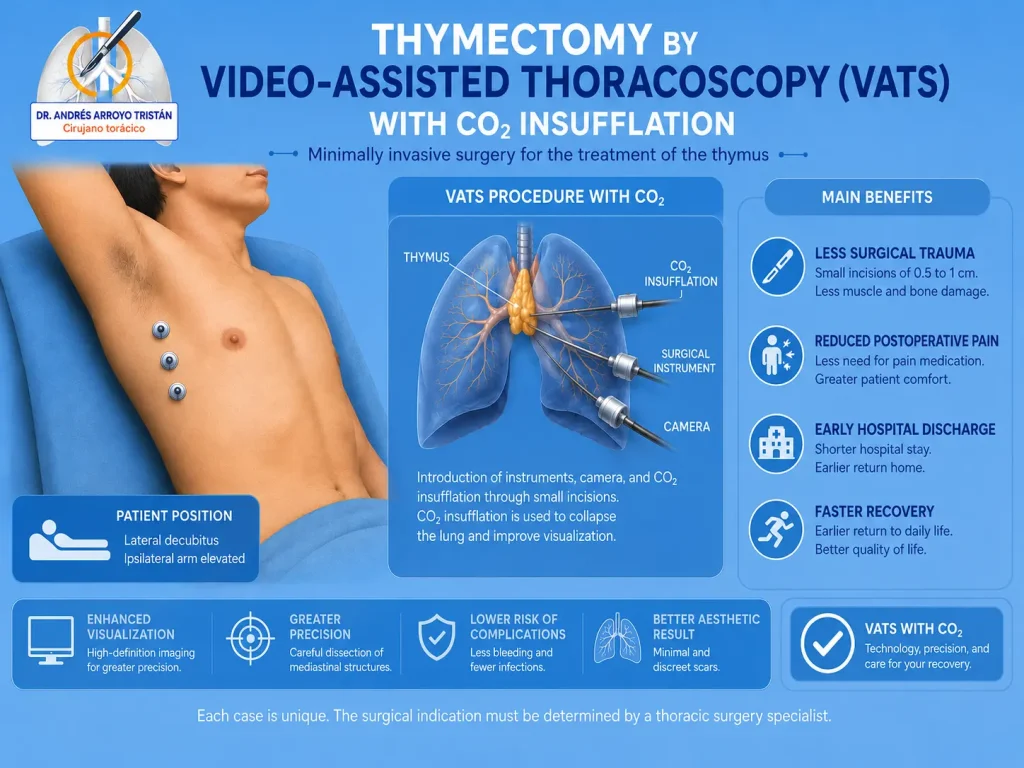
At present, minimally invasive surgery has transformed the approach to the mediastinum. Video-assisted thoracoscopic thymectomy with CO₂ insufflation (VATS) allows complete resection of the thymus through small lateral incisions, with excellent visualization of the mediastinum and preservation of adjacent structures.
The main benefits of this approach include less surgical trauma, reduced postoperative pain, early hospital discharge, and faster recovery, while maintaining oncological and functional results equivalent to open sternotomy. This advance has established VATS with CO₂ insufflation as the modern standard for thymectomy in selected patients, offering a safe and effective alternative with less impact on postoperative quality of life.