'/%3E%3Cpath%20fill='%23b2b2b2'%20d='M241%20382q0%2016%2017%2026%2017%2011%2042%2011t42-11q16-11%2017-26V269H241'/%3E%3Cpath%20fill='%239f7e00'%20d='M241%20379q0%2014%208%2023%209%209%2021%209%2014%200%2021-9%209-9%209-23V269h-59'/%3E%3Cpath%20d='M241%20339v-70h59v110q0%2014-9%2023l-6%205v-68h-15v72q-8%200-14-4v-68zm59%2040c0%2022%2015%2032%2029%2032%2021%200%2030-18%2030-32v-40h-59'/%3E%3Cpath%20fill='%239f7e00'%20d='M266%20277v5h2v12h-3v-5h2v-5h-9v5h2v5h-4v9h3v18h-5v10h34v-10h-5v-18h3v-9h-4v-5h2v-5h-9v5h2v5h-3v-12h2v-5zm42%20101q0%2010%206%2017%206%206%2015%207%2010-1%2016-7%206-7%206-17v-29h-43'/%3E%3Ccircle%20fill='%230044ad'%20cx='329.5'%20cy='372'%20r='6'/%3E%3Cellipse%20fill='%230044ad'%20cx='300'%20cy='340'%20rx='16'%20ry='21'/%3E%3C/svg%3E)

FACIAL BLUSHING SURGERY IN MURCIA
WHAT IS FACIAL BLUSHING?
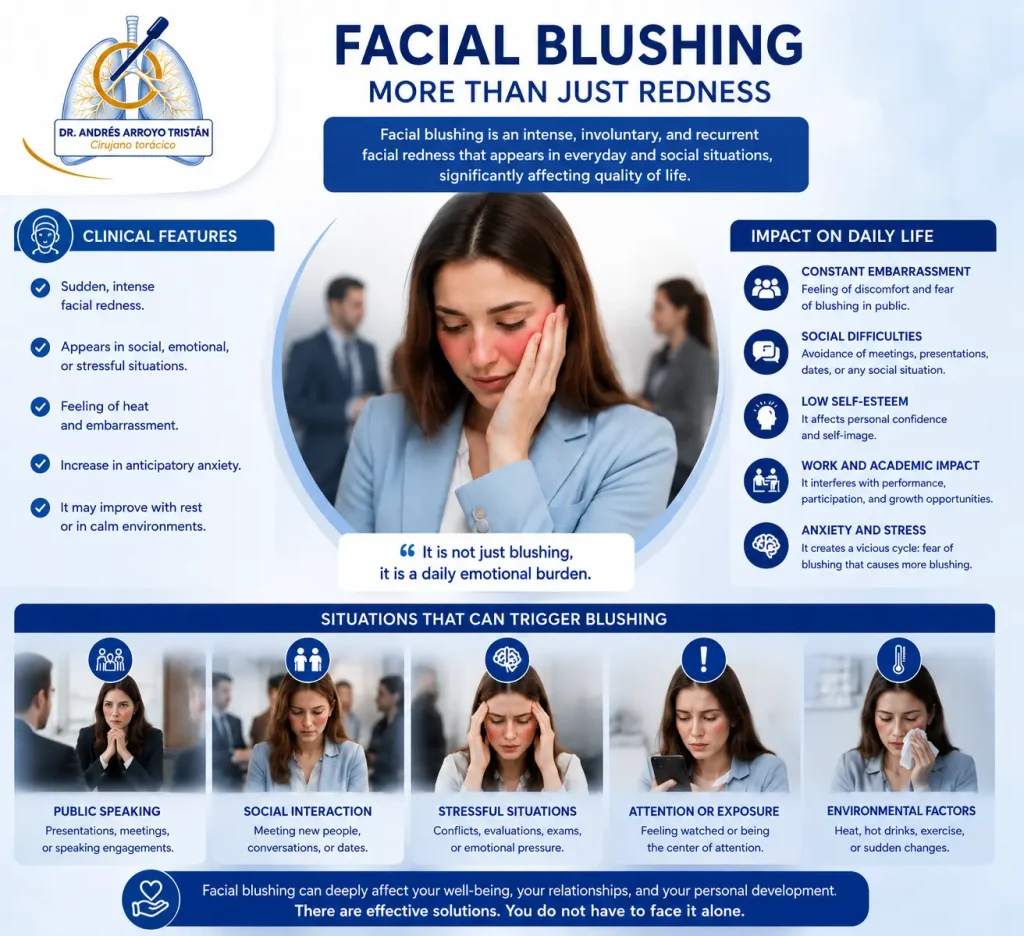
Facial blushing can deeply affect your well-being, your relationships and your personal development.
There are effective solutions. You do not have to face it alone.
Facial blushing or pathological facial flushing is an exaggerated and involuntary response of the sympathetic nervous system that causes intense and visible redness of the face, usually triggered by social, emotional or public exposure situations. Although physiological blushing is part of a normal response of the body, in some patients it reaches an intensity and frequency that leads to functional limitation, social avoidance and significant deterioration in quality of life. The main mechanism consists of excessive vasodilation of the facial cutaneous vessels mediated by the sympathetic nervous system, and it may appear in isolation or be associated with other autonomic disorders such as hyperhidrosis.
The clinical presentation is usually characterised by episodes of sudden and intense facial redness, facial warmth, discomfort in social situations, anticipatory anxiety and a tendency to avoid meetings, presentations or personal interactions. In some patients, a feedback loop appears in which the fear of blushing favours new episodes. Diagnosis is mainly clinical, based on a detailed assessment of symptoms, triggering factors, functional impact and exclusion of other causes of facial redness such as rosacea, endocrine disorders, pharmacological effects or vascular diseases. In certain cases, a multidisciplinary assessment may be useful to differentiate primary blushing from other associated disorders.
Treatment must be individualised according to the intensity of the symptoms and the degree of impact on quality of life. The available options include behavioural measures, emotional control techniques, psychological or cognitive behavioural therapy, pharmacological treatment in selected patients and strategies aimed at reducing autonomic activation. When blushing is severe, persistent and refractory to conservative treatment, surgical treatment may be considered.
The minimally invasive surgical alternative consists of thoracic sympathicotomy using uniportal video-assisted thoracoscopy (Uniportal VATS) assisted by laser, whose aim is to interrupt, in a controlled manner, the sympathetic transmission responsible for exaggerated facial vasodilation. The procedure is performed through a single small incision, usually with lateral thoracic access, allowing precise identification of the sympathetic chain and targeted sectioning with minimal tissue aggression.
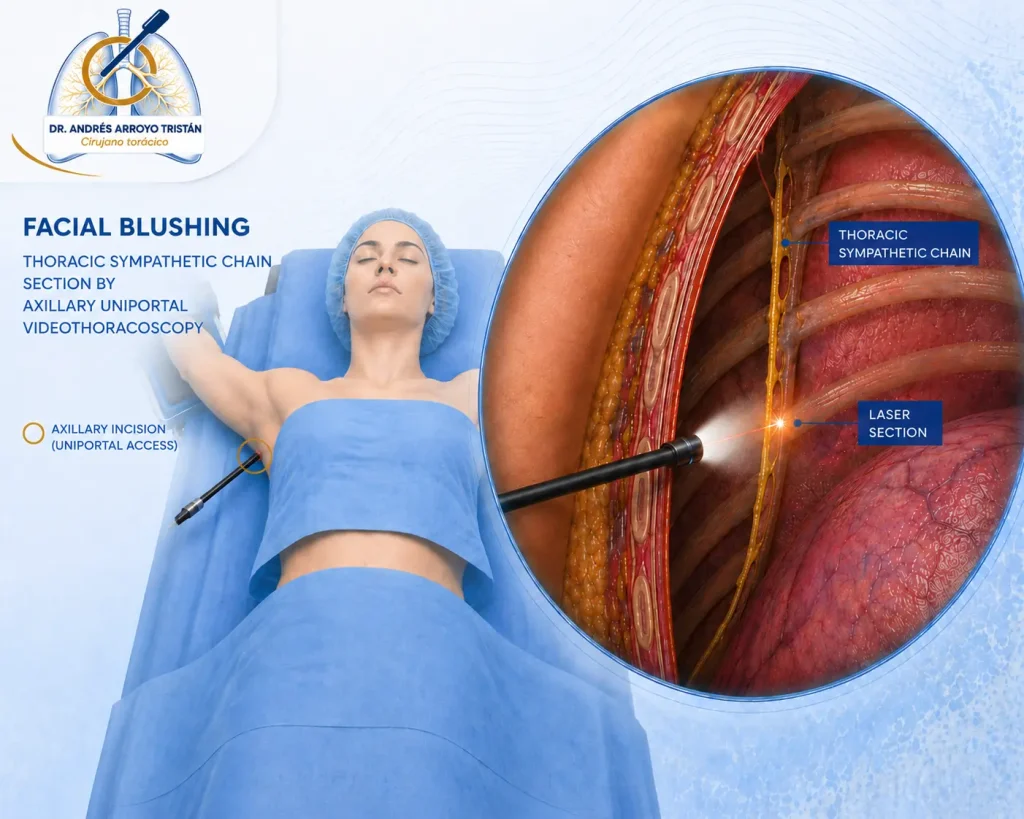
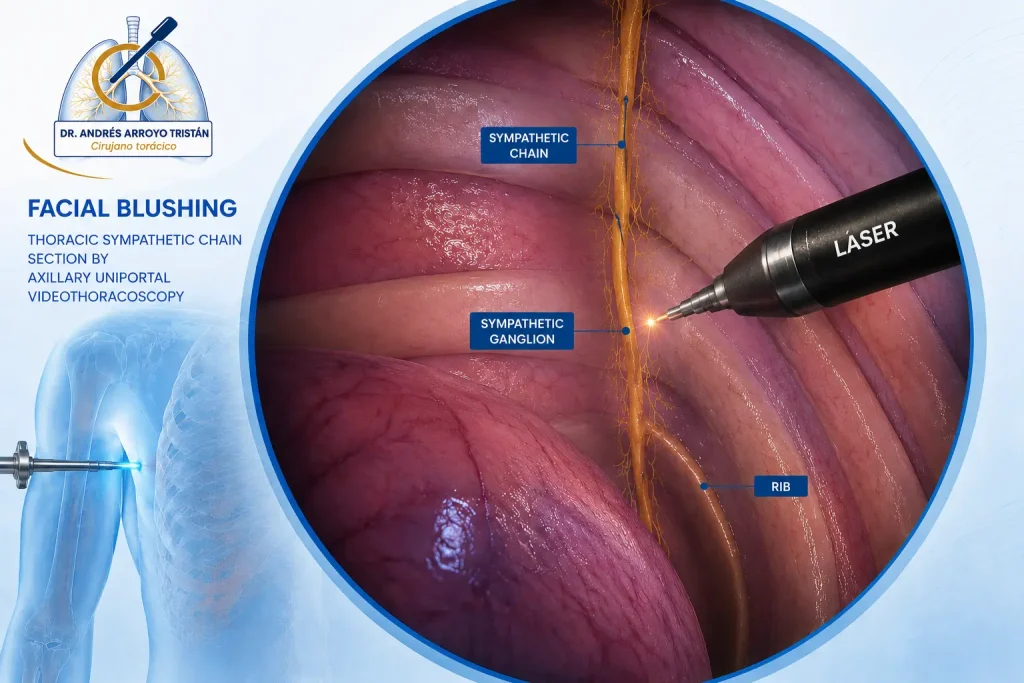
A technical aspect that is rarely explained is how the sympathetic chain section is performed. Traditionally, monopolar cautery was used. Today we can perform the section with laser. What advantage does laser offer? Laser causes lower thermal dispersion, less collateral damage to neighbouring tissues and greater precision by using more controlled energy.
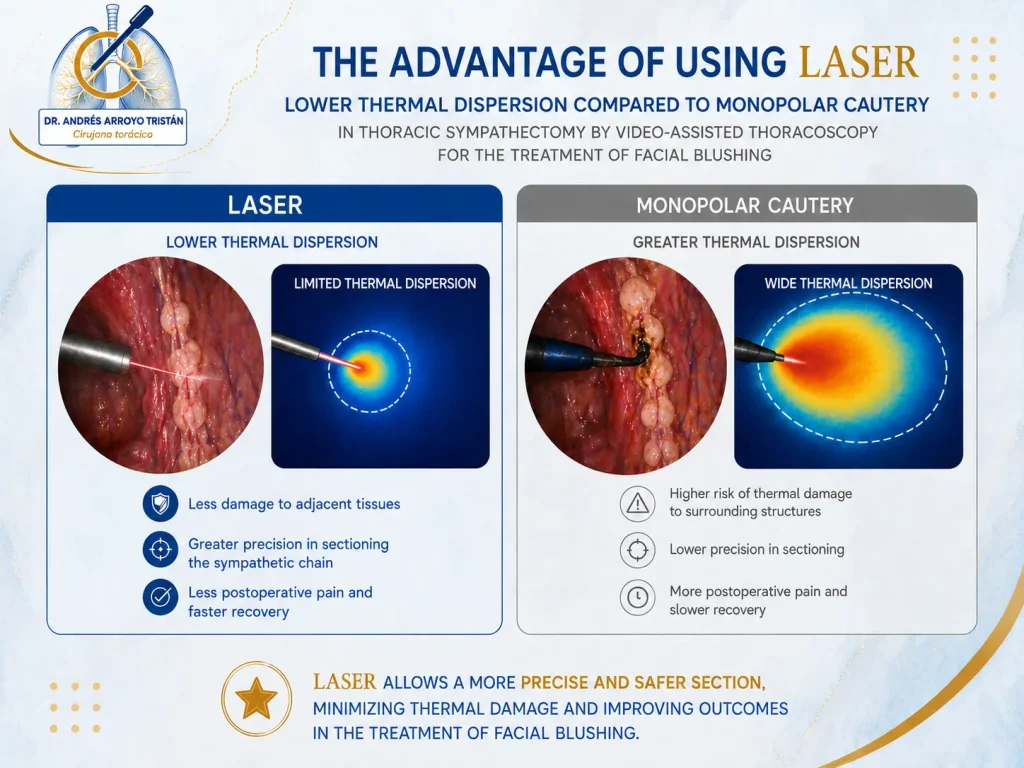
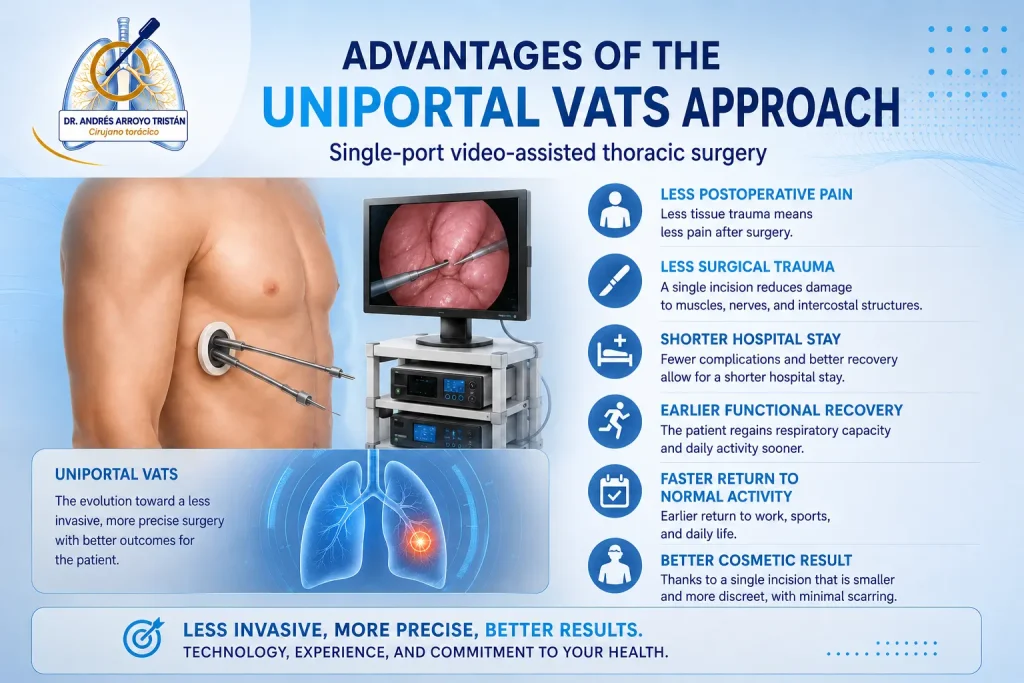
Among the benefits of uniportal video-assisted thoracoscopy (Uniportal VATS) are excellent anatomical visualisation, greater surgical precision, less aggression to the chest wall, less postoperative pain, a better aesthetic result and faster recovery with an early return to normal activity.
In properly selected patients, this approach offers an effective alternative to reduce facial blushing episodes and significantly improve quality of life and social confidence.